
Your garage door won't lift, stops partway, drops hard onto the slab or rides up crooked on one side. Garage door repair in Garland, TX begins by finding which part let go: a torsion spring, a lift cable, a roller, a track section or the opener's drive.
Garland · Dallas County
Garage Door Repair in Garland, TX
Getting your garage door repair right starts with the symptom: a door that will not lift, closes crooked or reverses is usually telling you which part has failed. Stop using it, then call before a broken spring strips the opener or bends the sections.
- No obligation to hire
- Stop a broken spring stripping the opener
- Car stuck inside? Call before you force the door
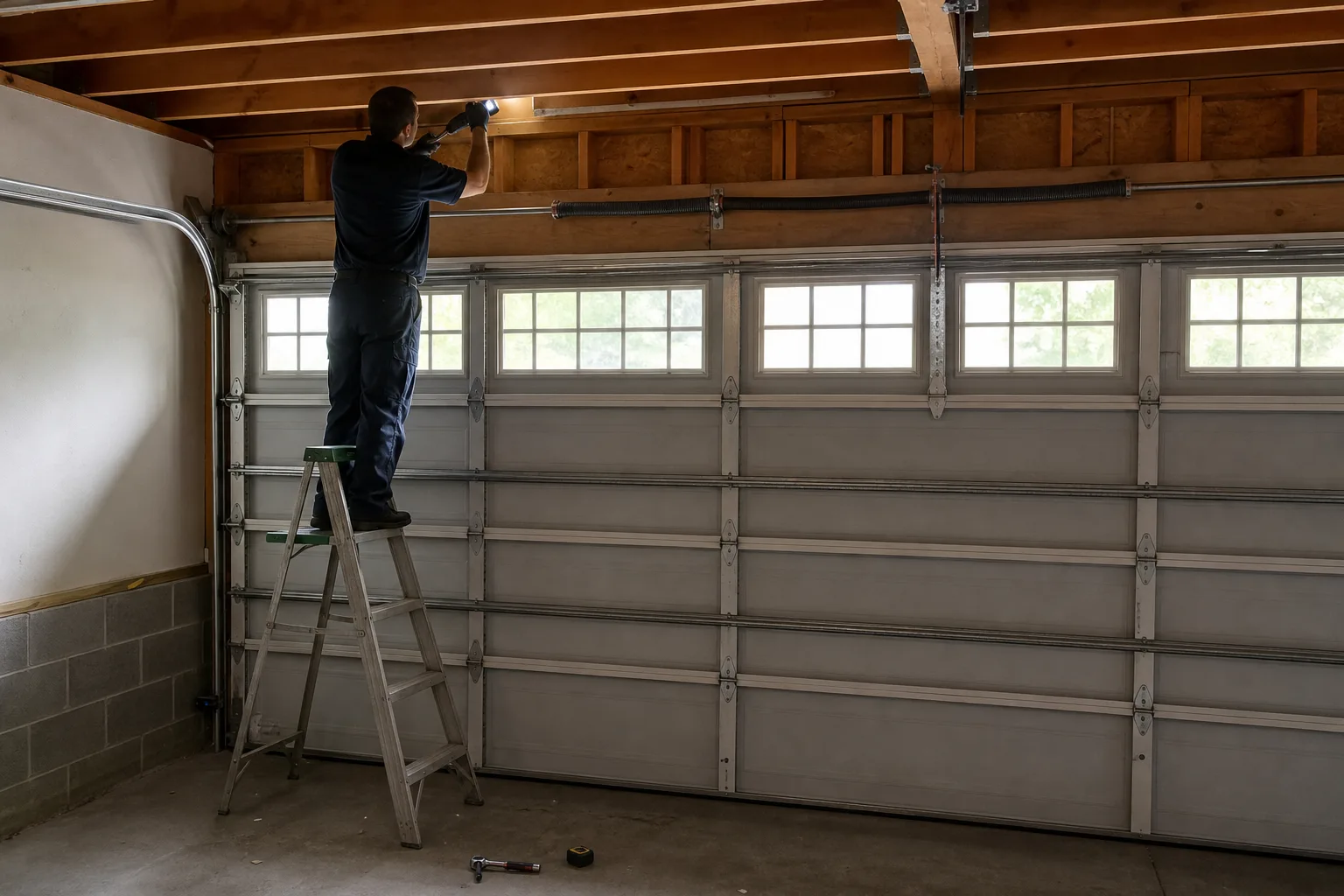
Diagnostics & symptoms
What a failing garage door looks like in a Garland home
Match what you notice to a card. Urgent means a safety sign or a fault that keeps getting worse; routine means the door underperforms but is safe to leave closed while you call.
Urgent
A loud bang and a door that will not lift
A snapped spring leaves the full weight of the door unsupported. Stop using the door and the opener, keep everyone clear and never touch the spring.
See the guide UrgentA loose, frayed or snapped cable
The lift cables carry the door on each side. With one gone, the door can drop or twist in its tracks, so leave it closed and keep clear.
See the guide UrgentThe door is crooked or off its track
A door out of its track can fall. Unplug the opener so nobody runs it, and do not try to push the rollers back in by hand.
See the guide RoutineThe opener hums, clicks or blinks but nothing moves
Check that it is plugged in and the outlet works. If it is, a gear, a board or the springs are the likely cause, so stop running it and call.
See the guide RoutineThe door reverses or the remote stopped working
Blocked or misaligned safety sensors make a door reverse; a dead battery or lost programming stops a remote. Both keep the door from closing safely, so call.
See the guide RoutineA dented section or a door that has seen better days
One damaged section can often be replaced on its own. An old, heavy or badly damaged door raises the question of a full replacement.
See the guideLocal standards
What shapes garage door repair in Garland
Homes from the 1970s and 1980s
Housing stockGarland's median home was built in 1978, nearly three in four homes went up before 1990, and the 1970s produced more of them than any other decade.
A door original to a house from those decades may still run on its first springs, cables, rollers and hinges, and hardware that old wears until a spring or cable lets go under the full weight of the door.
If your door is original to the house and starts to feel heavy, rattle on its rollers or hang unevenly, stop using it and call about spring, cable and roller work before a worn part fails.
How a repair works
Forcing the door against a careful inspection
The right-hand column describes how a door fault is usually found and fixed. The left shows what tends to happen when a broken door is forced, run through the symptom or worked on by hand.
| Stage | Delay or DIY hazard | Careful inspection |
|---|---|---|
| The symptom | Running the opener against a door with a broken spring strips its gears and can pull the door out of its tracks. | The door is left closed and the opener unplugged, and the symptom, the door type and its age are written down first. |
| Springs and cables | Springs and cables hold the weight of the door under high tension; working on them by hand is how garage door injuries happen. | Spring size, cycle rating and cable wear are checked, and worn parts are replaced as a matched set with the door secured. |
| Tracks and rollers | Hammering a bent track or forcing rollers back in leaves the door binding and the next failure closer. | Tracks are aligned and fastened, and worn rollers and hinges are replaced before the door is run again. |
| Opener and safety | Turning up the force setting to make a sticking door close hides the fault and weakens the safety reverse. | The door is balanced first, then the opener's force, limits and auto-reverse are set and tested with the safety sensors. |
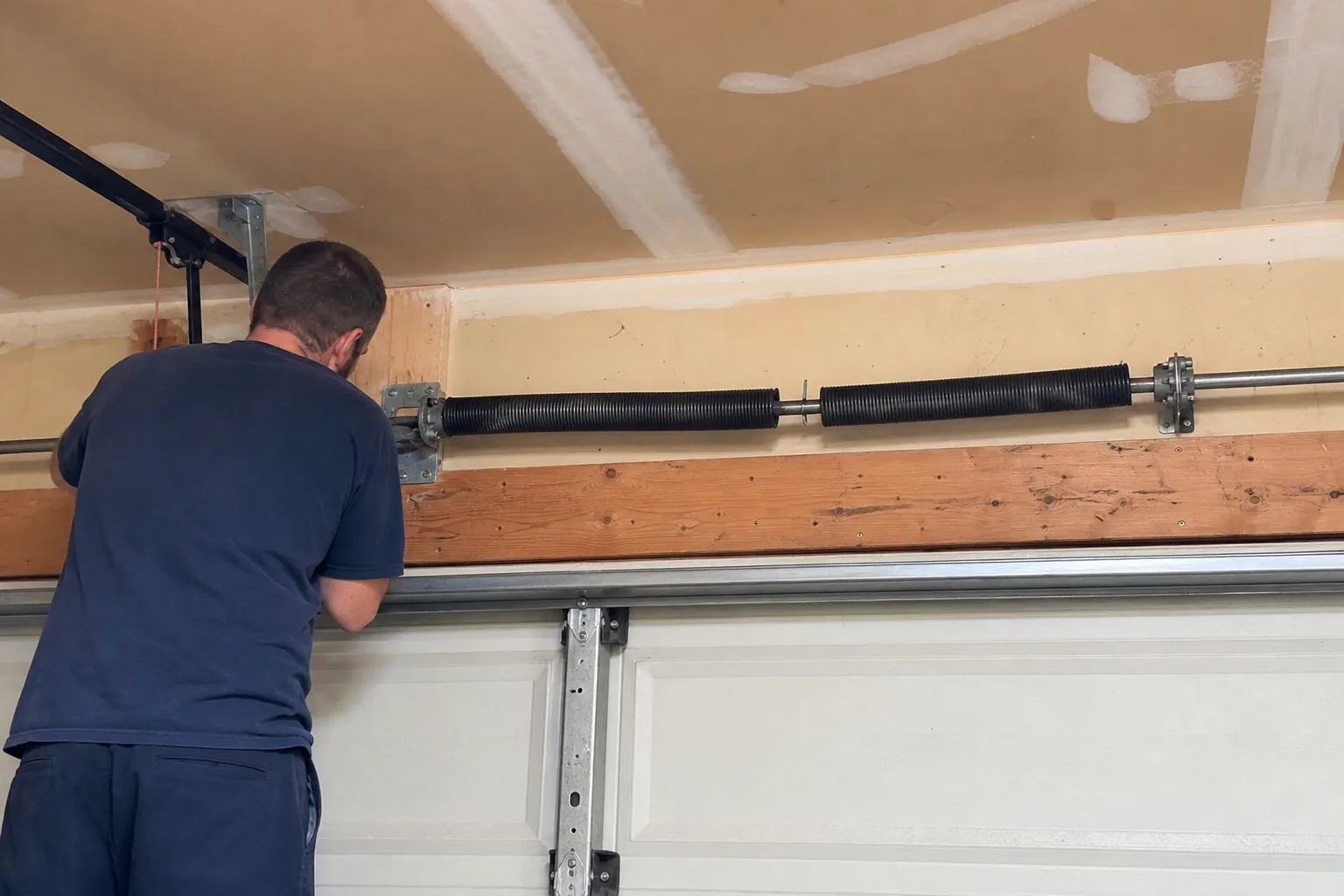
Why call
Why the first call matters in Garland
A garage door fault rarely stays the same size. A door run on a broken part turns one repair into several, so the call you make now decides how much of it you keep.
- Professional garage door service starts with the springs, cables and tracks that carry the door's weight and follows the door and opener manufacturers' instructions.
- The size and weight of your door, its age and the opener it runs on shape the repair, so an older, heavier door is the one to call about first.
- Calls come from across Garland and Dallas County, right up to the city line.
1
The right kind of help
Springs, cables, openers, new doors and commercial roll-up doors each call for different parts and a different approach.
2
Local conditions
Door wear in Dallas County follows the local weather and the way homes are built, so professional service accounts for both before any part is replaced.
3
Call before it spreads
A door run on a broken spring strips the opener and bends the sections. Stop using it and call before that chain starts.
What you are seeing
Garage door stuck, crooked or slamming onto the slab
Your door weighs several hundred pounds, and the springs carry that weight, not the opener. When a spring or cable fails, each press of the remote loads parts built for a fraction of that weight, and one broken part spreads into a bent track, a cracked section or a burned-out motor.
Loss risk
One worn spring loads the whole door
A torsion spring wears with every open-and-close cycle, and a door in daily use runs through thousands of them. As the spring weakens, the cables take more of the load, the rollers bind in the track and the opener strains to lift what the spring no longer balances.
That chain is why a door that only feels heavy deserves a call before it stops. A weak spring snaps without warning, and the door that was sticky on Monday sits shut on Tuesday with your car inside, or drops from the top of its travel onto the slab.
Loss risk
Tracks, rollers and panels that bind or crack
A door that sticks halfway, scrapes one track or leaves daylight under one corner may have no broken spring at all. A bent track section, a worn roller or a cracked panel throws the door out of square, and the opener keeps pushing it through the bind.
Every cycle on a door that has racked out widens the damage: a roller that jumps the track bends it, the bent track chews the next roller, and a cracked panel loses the stiffness that keeps the door flat. Stop forcing a door that scrapes or hangs unevenly and call while the fix is one track section or one set of rollers.
Stop cycling a door that feels heavy or hangs crooked, then call: on a Garland garage door, one worn spring shifts its load onto the cables, rollers and opener.
(817) 330-7674Repair scope
What garage door service covers in Garland
Professional diagnosis treats your door, springs, cables, tracks and opener as one system, because the part that broke is rarely the only part under strain.
- Springs and cables
New torsion or extension springs and lift cables, matched to the weight of your door, restore the balance the opener depends on.
- Tracks and rollers
Straightened or replaced track sections and new rollers bring the door back into square with its opening.
- Opener diagnosis
Fault tracing separates a worn drive gear, a failed logic board, a lost remote pairing and misaligned safety sensors.
- Panels and hinges
Replacement sections and hinges take the place of cracked ones, so the door lifts evenly and meets the floor.
- Weather seals
A new bottom seal closes the gap that lets in rain, dust and summer heat.
- Replacement
When several panels are cracked or the door keeps failing, a new garage door installation sized to the opening ends the string of repairs.
What you are seeing
Opener, sensor and remote faults
You press the remote and nothing happens, the motor hums while the door sits still, or the door starts down and reverses before it reaches the slab. Each symptom points to a different fault, from blocked or misaligned safety sensors to a stripped drive gear or a disconnected trolley.
Running an opener against a fault wears the drive further and can leave your garage stuck open overnight. Opener repair and a new opener installation both turn on one question: whether the drive can carry your door once the springs balance it.
Many opener faults start in the door, not the motor. A door that is out of balance overloads the motor, trips the auto-reverse and strips the drive gear, so a new opener bolted to a bad spring fails the same way and leaves the real fault in place.
Triage order
When a door needs replacement and not another repair
A door with several cracked panels, rusted hinges and a second set of springs on the way out keeps failing in new places. Each repair lasts only as long as the weakest part left, and a panel that has lost its stiffness keeps pulling the tracks out of line.
Diagnosis separates a door worth repairing from one that has finished its service life. A new garage door installation, with springs, tracks and opener matched to the opening, replaces several worn parts in one job and ends the string of separate calls.
Property type
Commercial overhead and roll-up doors
A loading door that won't lift halts your deliveries, and one stuck open leaves your shop or warehouse exposed overnight. Commercial overhead door repair covers sectional and roll-up doors, their springs and cables, and the operators that drive them, including doors struck by a forklift or a truck.
A commercial door cycles far more often than a house door, so its springs and guides wear sooner and a bent section fails under heavier use. Stop running a damaged door and call: each cycle on a bent door wears the guides and strains the operator.
Safety protocol
Keep people and cars clear of an unbalanced door
Keep children, pets and vehicles out of the opening, and leave the door where it sits until a diagnosis shows the springs and cables can carry it. A wound torsion spring stores enough force to cause serious injury, and a cable that fails under load drops the door without warning.
Never wind, loosen or release a spring or bottom bracket yourself, and never pull the emergency release on a door with a broken spring. A car trapped behind a broken door stays safer where it is: prying the door up bends the tracks and can drop the door onto the hood, so call first.
Service sequence
How a service call runs, from diagnosis to testing
Every visit runs in one order, so the work removes the cause and not just the symptom you saw.
- Diagnosis
A check of the whole door system traces the failure back to the part that started it.
- Options
You hear what failed, what else is under strain and whether repair or replacement fits before any work begins.
- Repair
New parts go in, and spring tension is set to the weight of your door.
- Testing
Balance, travel limits, auto-reverse and the safety sensors run through full cycles before the door returns to daily use.
Triage order
Why calling promptly protects your door across Dallas County
Every cycle on a failing door adds damage: a worn spring or a frayed cable becomes a kinked track, a cracked panel and a dead opener.
In Garland and across Dallas County, a door stuck shut traps your car, and a door stuck open leaves your garage and everything in it exposed.
A door jammed partway also breaks the seal around the opening, so rain and dust blow in while the garage sits unsecured. Call now, while the job is still one part and not a whole door.
Local housing
The garages and doors of Garland homes
Garage slabs on Blackland Prairie clay
Housing stockUSDA soil mapping for Garland shows Houston Black-Urban land complex as its most widely mapped soil, with Houston Black, Branyon, Heiden and Ferris clays rated at 12 to 17 percent linear extensibility, so the ground swells wet and shrinks dry.
When your garage slab or the wall framing moves with that clay, the opening racks out of square: the vertical tracks pull out of plumb, the rollers bind and the bottom seal leaves a gap at one corner.
If your door starts sticking, scraping a track or sealing on one side only after a dry summer or a wet spring, stop forcing it and call for track and alignment work.
Climate & weather
Cold, heat and storms around Garland
Hard freezes and 100-degree summers
Climate and weatherDFW Airport, the official Dallas-Fort Worth weather station west of Garland, averages a freeze season from November 22 to March 12; the February 2021 winter storm held temperatures there at or below freezing for 139 straight hours with a low of -2°F, and an average summer reaches 100°F by July 1.
Every open-and-close cycle wears a torsion spring, and hard cold adds stress to a spring already near the end of its life, while summer heat in a closed garage dries out the bottom seal and loads the opener.
If a spring snaps or the door stalls during a freeze, leave the door closed and call before anyone tries to force it open.
Service area
Serving Garland & Dallas County
Coverage
Covered ZIP codes (9): 75040, 75041, 75042, 75043, 75044, 75045, 75046, 75047, 75049
Questions
Garland garage door repair — FAQ
What should I check before calling about a garage door problem in Garland?
Look without touching: is there a gap in the spring above the door, a loose or frayed cable at the bottom corners, or a roller out of its track? Check that the opener is plugged in and that the small lights on the safety sensors near the floor are lit. If any of those is wrong, stop using the door and call before the opener strips its gears.
What do I do if I hear a loud bang and the door will not lift?
A loud bang from the garage is often a torsion spring breaking. Stop using the door and the opener, keep everyone clear of the opening and do not pull the emergency release while the door is open. A car stuck inside makes it urgent: call before you try to force the door.
Why does the opener run but the door stays shut?
When the motor hums or the light blinks and the door does not move, a broken spring, a snapped cable or a disconnected trolley is the usual cause. Running the opener against a door that has lost its spring can strip its gears, so switch it off and call.
Should I repair or replace an older garage door?
It depends on the condition of the sections, how often the door has needed work and whether parts are still available. When several sections are damaged or the door is heavy and worn, replacing it becomes the practical question. Calling before the next failure keeps that decision yours instead of an emergency.
Which parts of Garland and Dallas County are served?
All of Garland and the surrounding Dallas County area. Coverage runs right up to the city line.
How do I check the person who comes to work on my door?
Ask for the company name, check its license and insurance where your state or city requires them, and get the price for the work in writing before it starts.
A door held by a broken spring is a door waiting to drop.
Call from Garland before a broken spring or cable strips the opener or bends the sections.