
An opener shares its garage circuit with whatever else plugs in there. A tripped ground-fault outlet, a loose plug or a dead receptacle leaves a sound opener with no power, so the trace starts at the wall and works toward the motor.
Service · Garland, TX
Garage Door Opener Not Working in Garland, TX
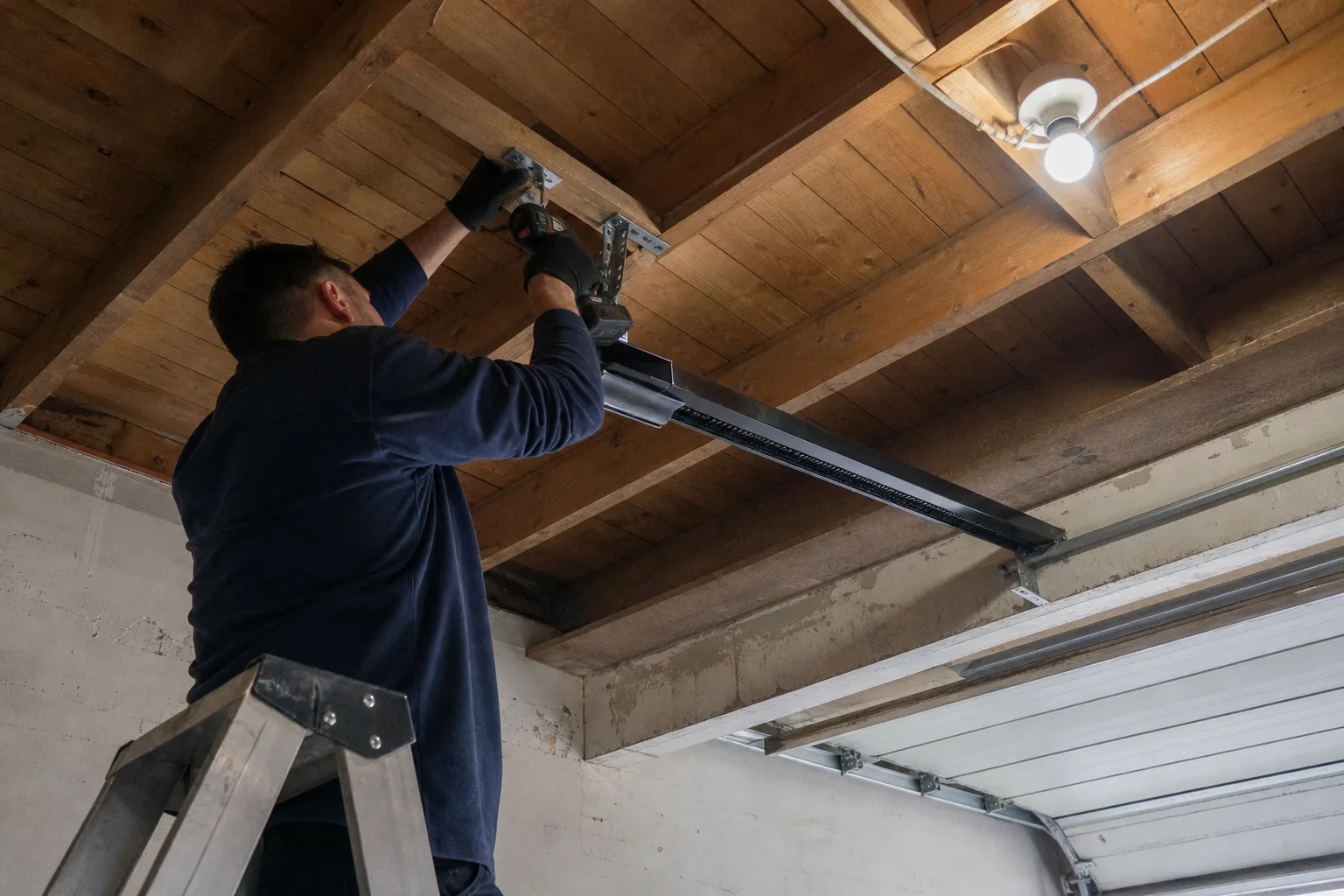
Your garage door opener is not working: the wall button does nothing, the motor hums for a second and cuts out, or the unit went dead after a power surge. A garage door opener not working usually traces to the outlet circuit, the logic board, a start capacitor or a motor that tripped its thermal overload. Stop pressing the button, leave the door down, and call about the opener.
What you are seeing
Five ways an opener goes dead
An opener that will not run fails in a pattern you can see and hear from your garage floor. The pattern narrows the part.
- Total silence
No lamp, no click and no hum from your wall button or any remote.
- Click, no motor
A relay on your board clicks, but your motor never turns.
- One-second hum
The motor hums and stops, the usual sign of a failed start capacitor.
- Runs, then quits
The opener finishes a few cycles and goes dead until the motor cools.
- Dead after a surge
A power surge can scorch the board while the outlet still carries current.
Loss risk
What repeated presses do to a failing opener
Pressing again on an opener that will not start pushes current through a motor that cannot turn. Heat builds in the windings and on the board, and a one-part repair grows into several.
- Cooked windings
A motor that cannot start against a dead capacitor overheats its own insulation.
- Welded relays
Contacts on the logic board pit and fuse each time they switch a stalled motor.
- Trapped vehicle
A dead opener holds the door down while your vehicle sits behind it.
- Closed route
A household that comes and goes through the garage loses that way in.
Property type
Why the outlet circuit comes first
When the outlet carries current and the opener stays silent, the fault has moved inside the unit.
Leave the door down and stop pressing the button, then call before another forced start burns the windings.
(817) 330-7674Local detail
A dead opener at a Garland garage
When the garage is how your household gets in and out, a dead opener leaves the car shut inside and the house reachable only through another door. Lock the door between the garage and the house, and call about the opener.
Repair scope
How a dead opener gets diagnosed
Diagnosis follows the current from your outlet to your motor and proves each part before anything is replaced.
- Supply circuit
The outlet, the breaker and any ground-fault protection feeding the garage.
- Wall button
Its wire run, its lock setting and a shorted switch.
- Logic board
Relays, the receiver and scorch marks left by a surge.
- Start capacitor
A swollen or leaking capacitor that cannot start the motor.
- Motor and overload
Windings, the thermal overload and the gear the motor turns.
- Door load
A door too heavy for the motor sends the fault back to the springs.
Service sequence
From a dead opener to a full cycle
Door left down
You stop pressing the button and keep the car out of the opening.
Power traced
Diagnosis finds the point where current stops between the outlet and the motor.
Part renewed
The failed capacitor, board or motor part comes out, and a matched part goes in.
Full cycle proven
Your door opens, closes and reverses at the floor from the wall button and every remote.
Triage order
Why the next call matters more than the next press
An opener that has gone dead once rarely recovers for good, and every forced start puts more heat into the motor and the board. Leave the door down and call from Garland or elsewhere in Dallas County while the fault still sits in one part.
Service area
Garland ZIP codes
- 75040
- 75041
- 75042
- 75043
- 75044
- 75045
- 75046
- 75047
- 75049
Every responding technician is independent. Before work begins, confirm the technician's license, insurance and pricing with them directly.
Common questions
Dead opener questions in Garland
Why does the opener click but the motor never turns?
The click is a relay on the logic board switching. If the motor stays silent after it, the capacitor, the motor or the board has failed, and repeated presses can fuse that relay shut.
Can a power surge kill an opener?
Yes. A surge can scorch the logic board while the circuit itself survives, which leaves the opener silent with power at the plug.
Why does the opener work, then quit for a while?
A motor that overheats trips its thermal overload and cuts power until it cools. Repeated trips point to a deeper fault worth a call.
Can the wall button be the reason the opener is silent?
Yes. A shorted button or a broken wire run can leave a sound motor and board with no start signal, and tracing the wire separates that fault from a board failure.
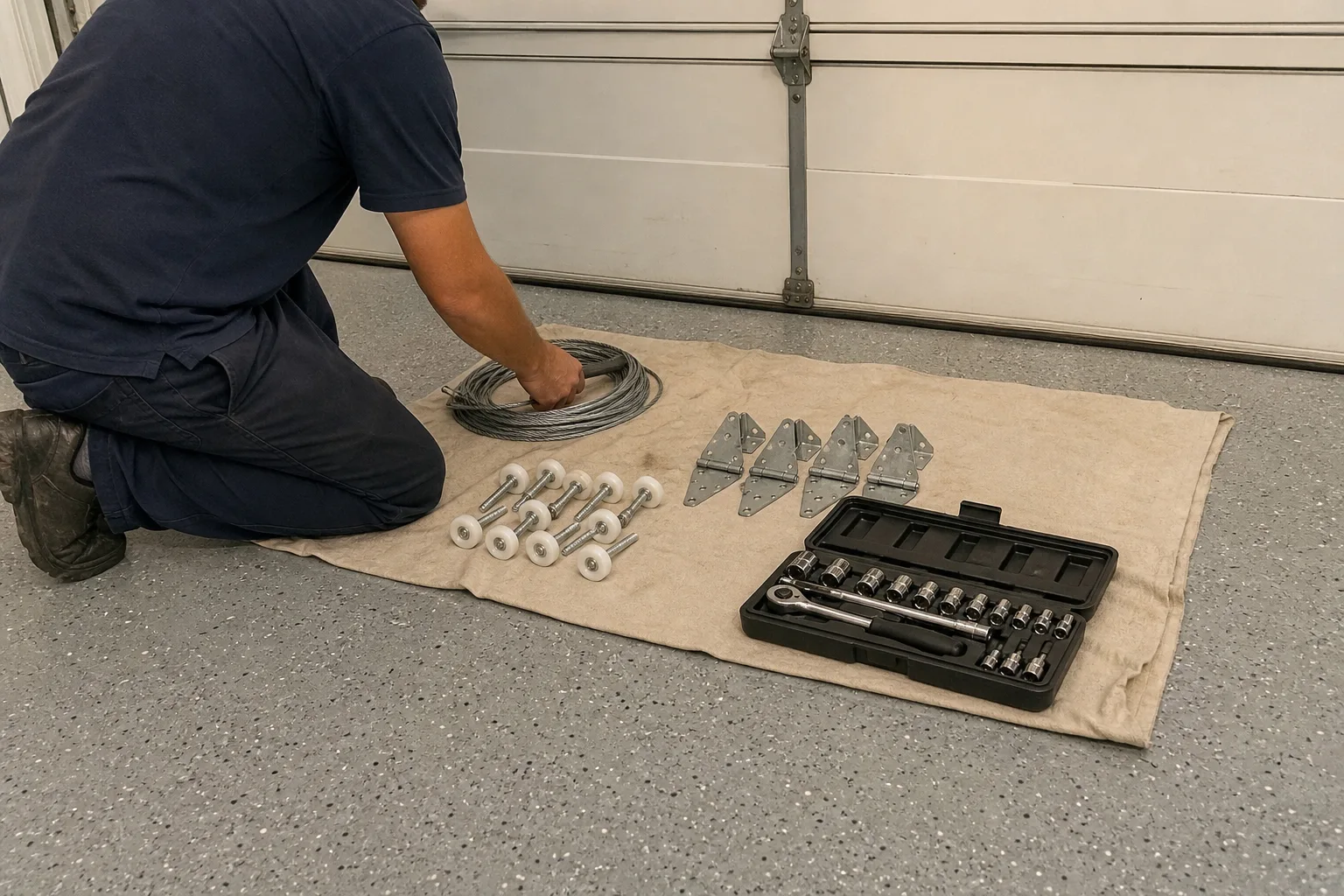
A door held by a broken spring is a door waiting to drop.
Call from Garland before a broken spring or cable strips the opener or bends the sections.