
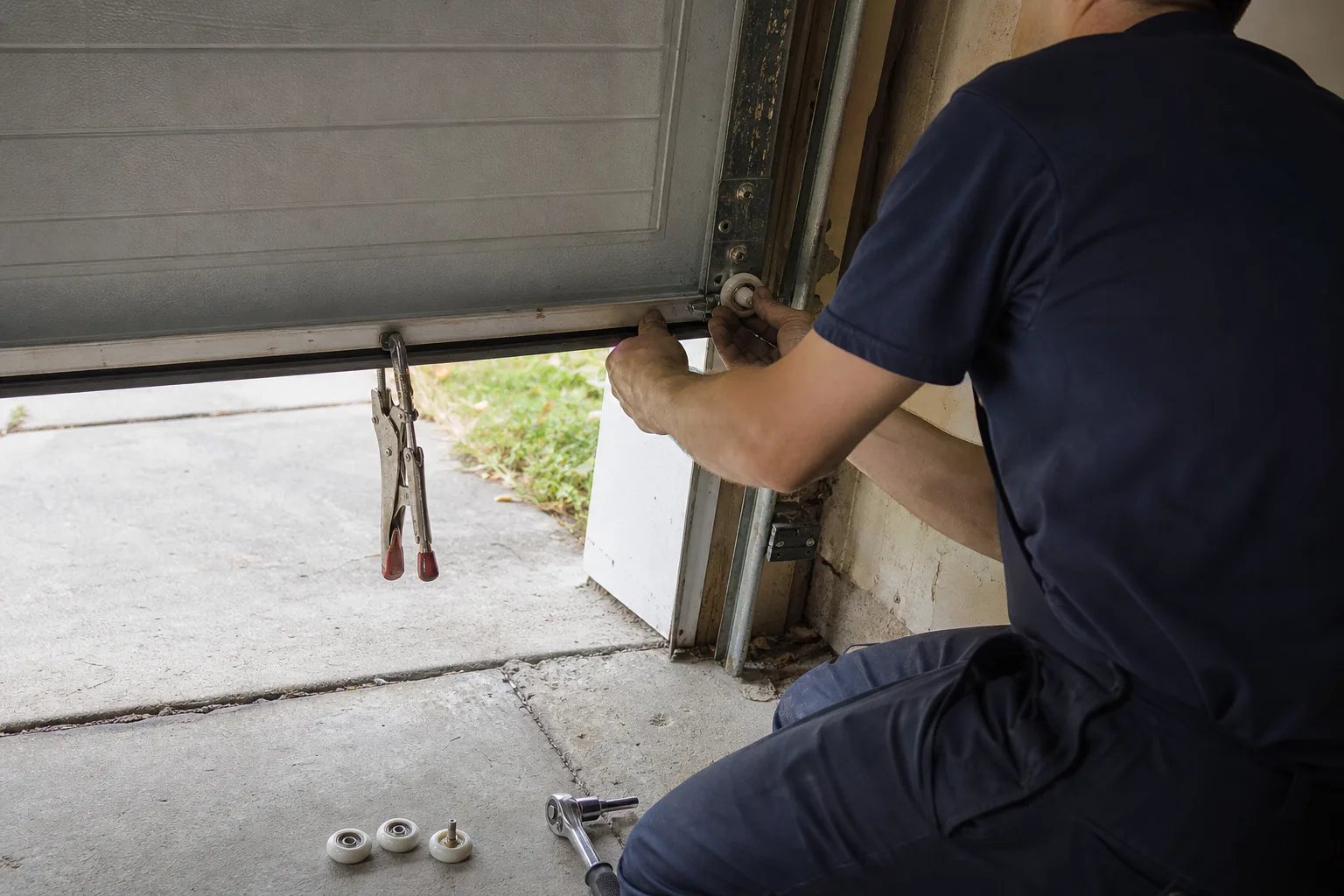
Hinges and rollers wear out long before the panels do. On a door that runs several times a day, thin hinges and dry rollers show it first, and a door that has never had them renewed tends to get louder every season.
Service · Garland, TX
Noisy Garage Door in Garland, TX
Your garage door grinds, squeals, pops or rattles every time it moves, and the noise keeps getting louder. A noisy garage door points at a worn part: rollers grinding on dry bearings, hinges cracking at the pins, a loose rail or a lift part near the end of its life. Call about the sound on your Garland garage door while the worn part is still the only damage.
What you are seeing
Match the sound to the part
Each sound your garage door makes comes from a specific part, and the sound tells you how worn that part is.
- Grinding or rumbling
Dry or seized rollers drag along the rail instead of rolling.
- Squealing
Dry hinge pins and roller stems rub metal on metal at every bend in the travel.
- Popping or snapping
A hinge, a bracket or a coil shifting under load makes a sharp crack as the door moves.
- Rattling or banging
Loose rail bolts, a slack chain or a section knocking its neighbor shakes the whole door.
- Loud bang, then quiet
A single bang from overhead with the door at rest often marks a broken lift part.
Loss risk
What a worn part wears out next
Noise on a garage door is friction or play, and both spread wear to the parts nearby. The louder your door gets, the more parts it involves.
- Grooved rails
Wheels that drag instead of rolling cut a groove into the rail lip, and the rail starts catching rollers.
- Cracked hinges
Hinges that flex under play split along their knuckles and loosen the panel edges.
- Loaded opener
A door that drags takes more force to move, and the opener's drive wears with it.
- Shaken fasteners
Vibration backs out the bolts on rails and brackets until a rail shifts out of line.
Property type
Hinges and rollers as wear parts
If your door has grown louder over the past months, those are the first parts to trace.
A sound that changes is a part that changed: call before the worn part takes the next one with it.
(817) 330-7674Local detail
A loud door beside the rooms of a Garland home
When a bedroom or living room shares a wall with the garage, a grinding door wakes the house every time it moves. If that is your Garland home, a quieter door starts with tracing the part that makes the sound.
Repair scope
How the noise gets traced
Diagnosis runs the door slowly through its travel, listening and looking at each point to tie each sound to its part.
- Roller wear
Dry or noisy rollers show at each hinge and bottom bracket.
- Hinge wear
Oval-worn pin holes and cracked knuckles show where the door flexes.
- Rail and fasteners
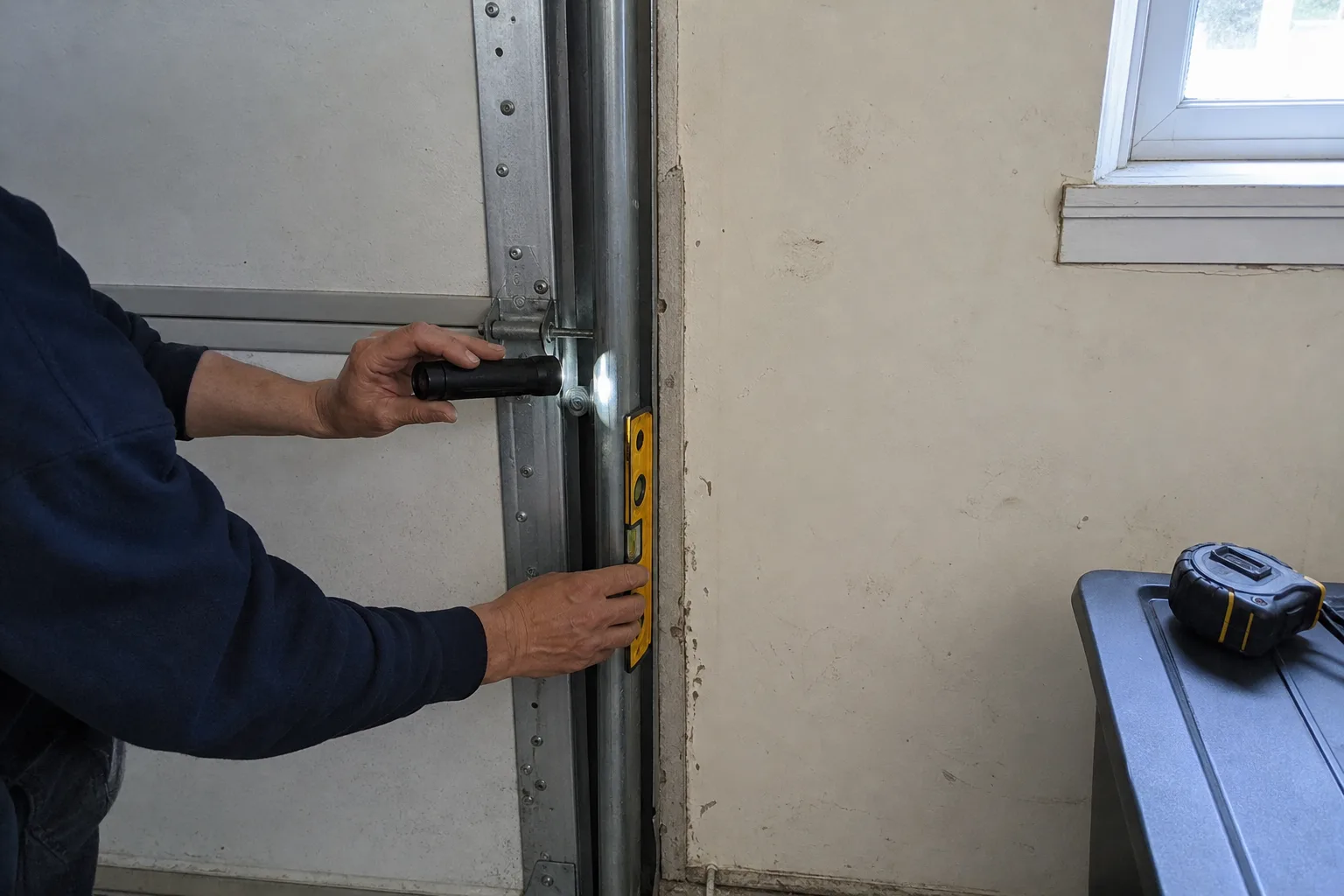
Loose bolts and rails out of line show where the door shakes.
- Balance
A door that no longer holds at mid-travel points at a balance fault, which takes its own diagnosis.
- Opener drive
A slack chain or worn drive gear separates opener noise from door noise.
Service sequence
From a loud door to a quiet one
Sound mapped
Diagnosis ties each noise to its part.
Weight held
The door stays balanced and supported while hardware comes off.
Hardware renewed
Worn wheels and hinges give way to new parts, and stripped holes get fresh fasteners.
Travel smoothed
The door glides without catching.
Quiet run
The door makes a silent trip from slab to header.
Triage order
Why a louder door is worth catching now
A noise that grows louder each week marks a part wearing faster. Calling while the sound is your only problem keeps the work to hinges and wheels instead of rails and panels.
Call from Garland or nearby in Dallas County when the sound changes.
Service area
Garland ZIP codes
- 75040
- 75041
- 75042
- 75043
- 75044
- 75045
- 75046
- 75047
- 75049
Every responding technician is independent. Before work begins, confirm the technician's license, insurance and pricing with them directly.
Common questions
Noisy garage door questions in Garland
Is a noisy garage door dangerous or just annoying?
It can be either. A squeal from dry hinges is wear; a pop or bang can be a lift part or a cable under strain, so a new sharp sound is worth a call.
Why did the door get louder all at once?
A sudden change usually means a part failed rather than wore: a roller seized, a hinge cracked or a coil broke. Stop running your door and call.
Do worn rollers damage the rest of the door?
Yes. They grind grooves into the rails, load the hinges and add strain to the opener on every cycle.
A door held by a broken spring is a door waiting to drop.
Call from Garland before a broken spring or cable strips the opener or bends the sections.